Technical Innovations for AI Policy
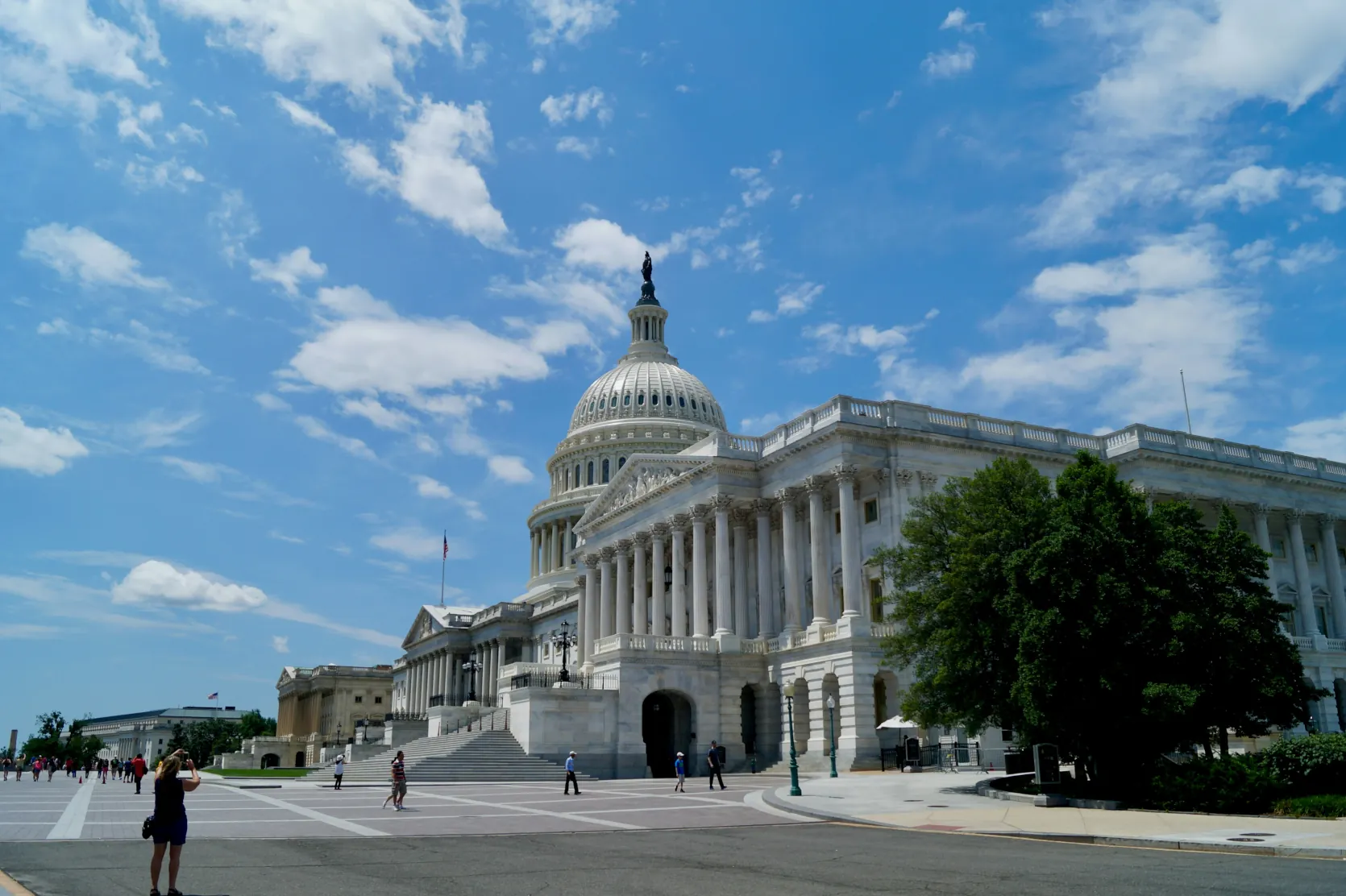
Washington, DC
•
Overview
FAR.AI, in collaboration with FAI, CNAS, and RAND, organized the inaugural Technical Innovations for AI Policy Conference, which took place in Washington, D.C. from Saturday May 31 - Sunday June 1.
This conference aimed to inspire technical professionals, build strong networks within technical AI governance, and catalyze impactful work on pressing technical AI governance challenges.
Sessions covered topics including:
- semiconductor supply chains and export controls,
- hardware-enabled mechanisms and on-chip governance tools,
- monitoring, reporting, and verification,
- data center and model weight security,
- defense and national security,
- model evaluations,
- energy and AI,
- and more.
- In addition to talks and discussions, the agenda included substantial time for networking and collaboration.
The event was aimed at researchers or engineers with relevant expertise—especially in hardware—or policymakers looking to learn more.
Financial support: This event is supported by FAR.AI’s general funds alongside generous contributions from Nevin Freeman and Brandon Goldman.
Planning to share or post about the event? You can find suggested language and graphics in the Media Kit.
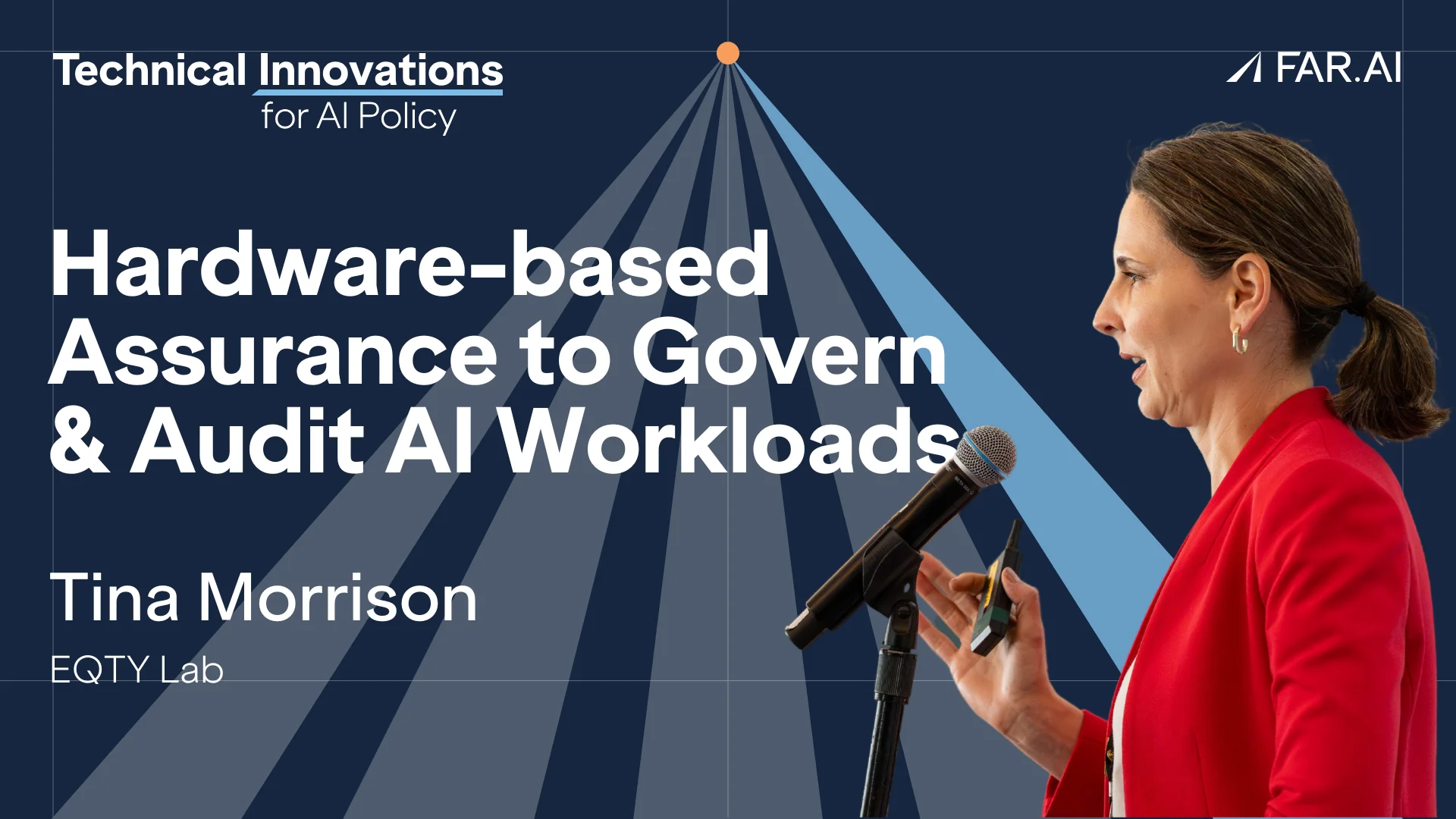
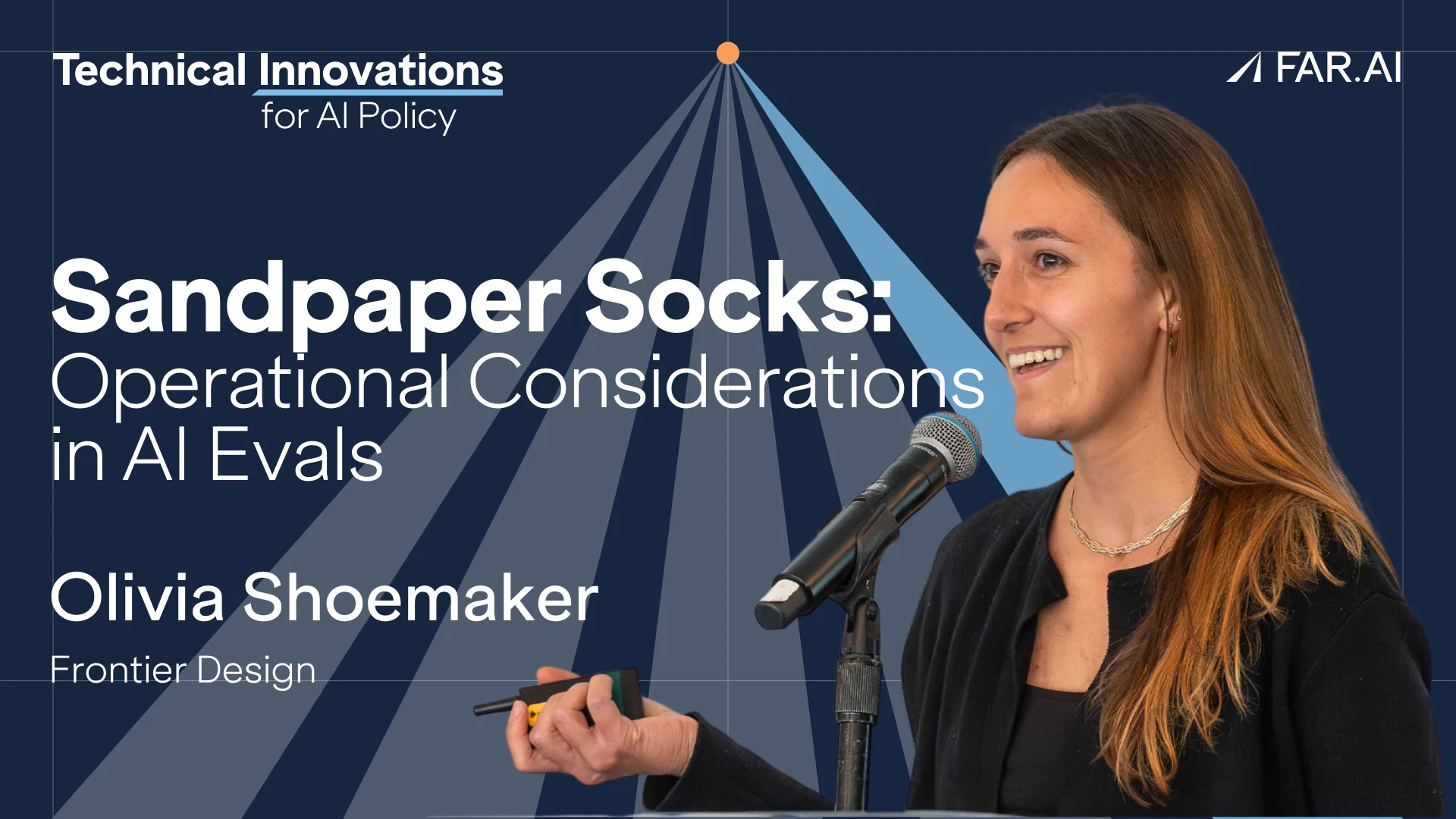
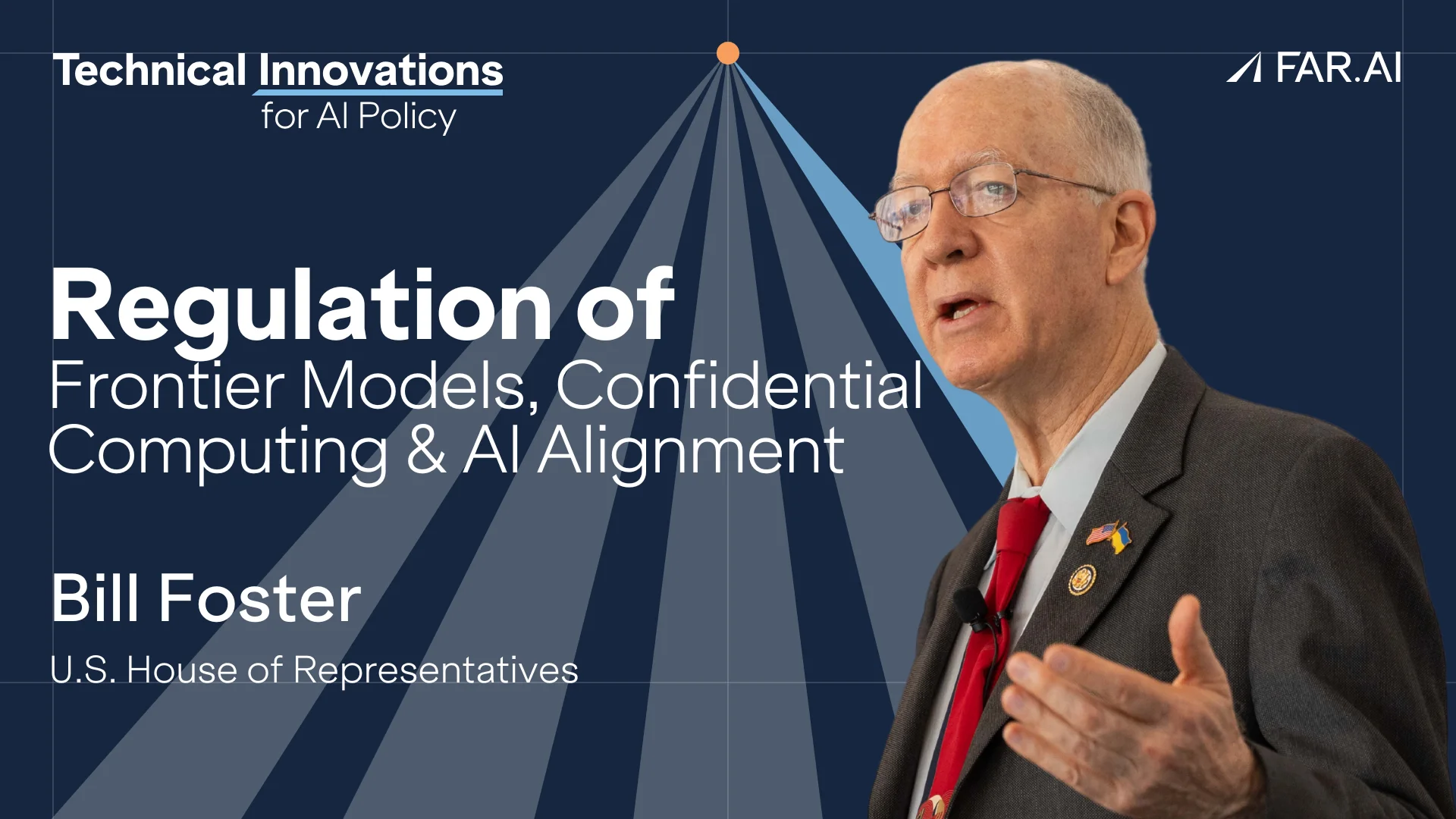
Our speakers included:
- Congressman Bill Foster
- Saif Khan (Institute for Progress and Bipartisan Senior Advisor to the U.S. House Select Committee on the CCP)
- Ben Buchanan (Johns Hopkins University)
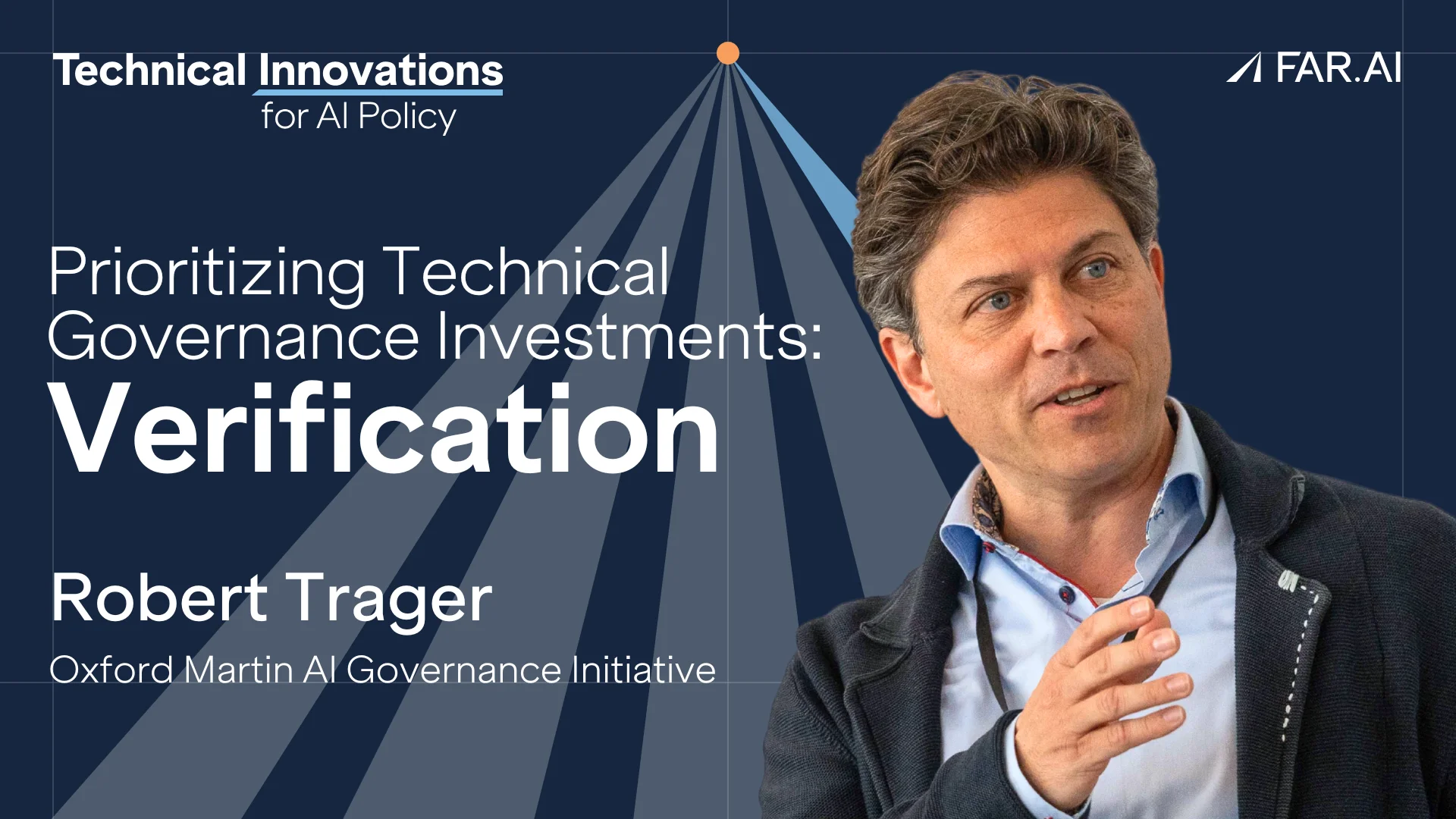
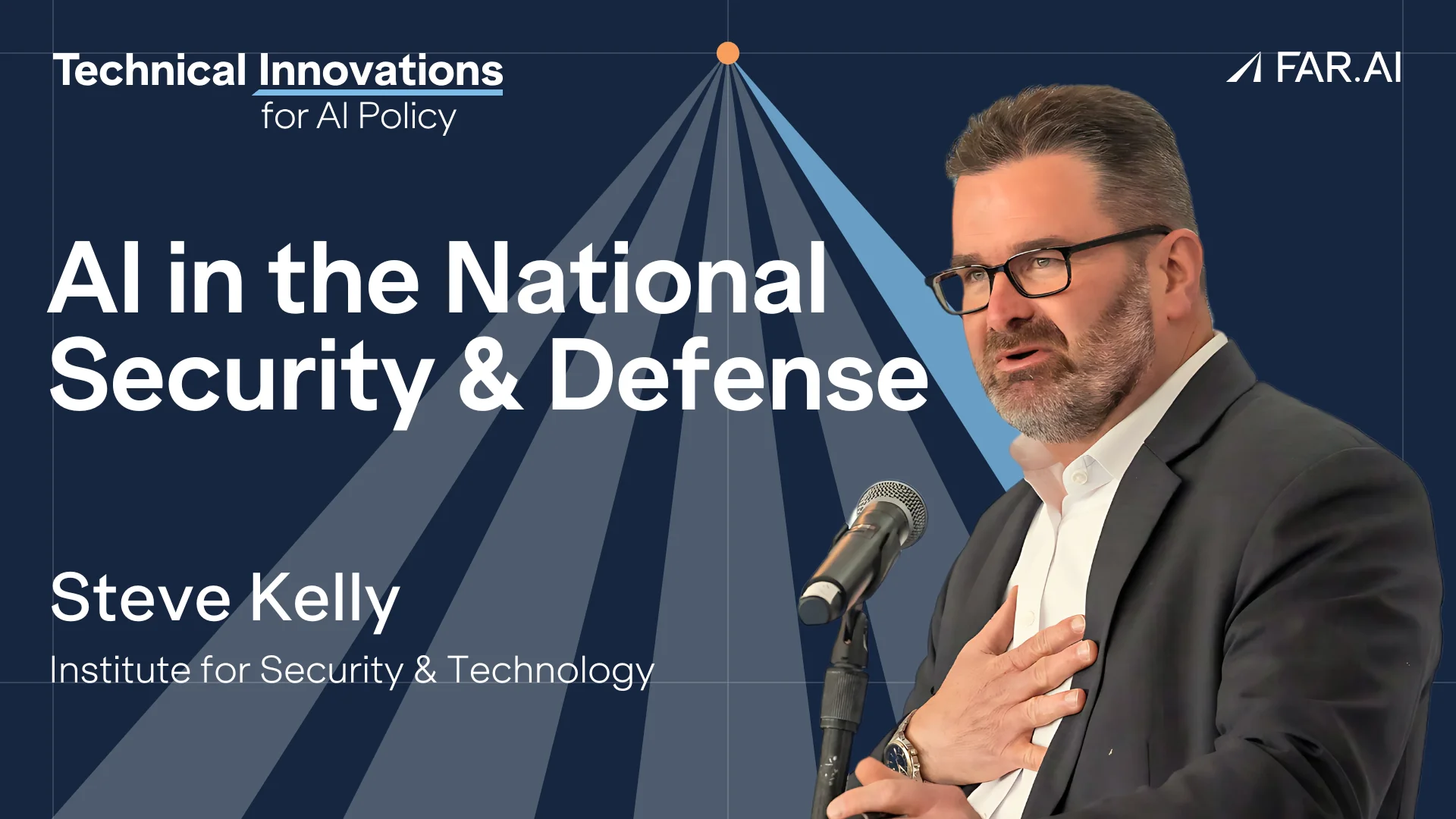
- Steve Kelly (Institute for Security and Technology)
- Samuel Hammond (Foundation for American Innovation)
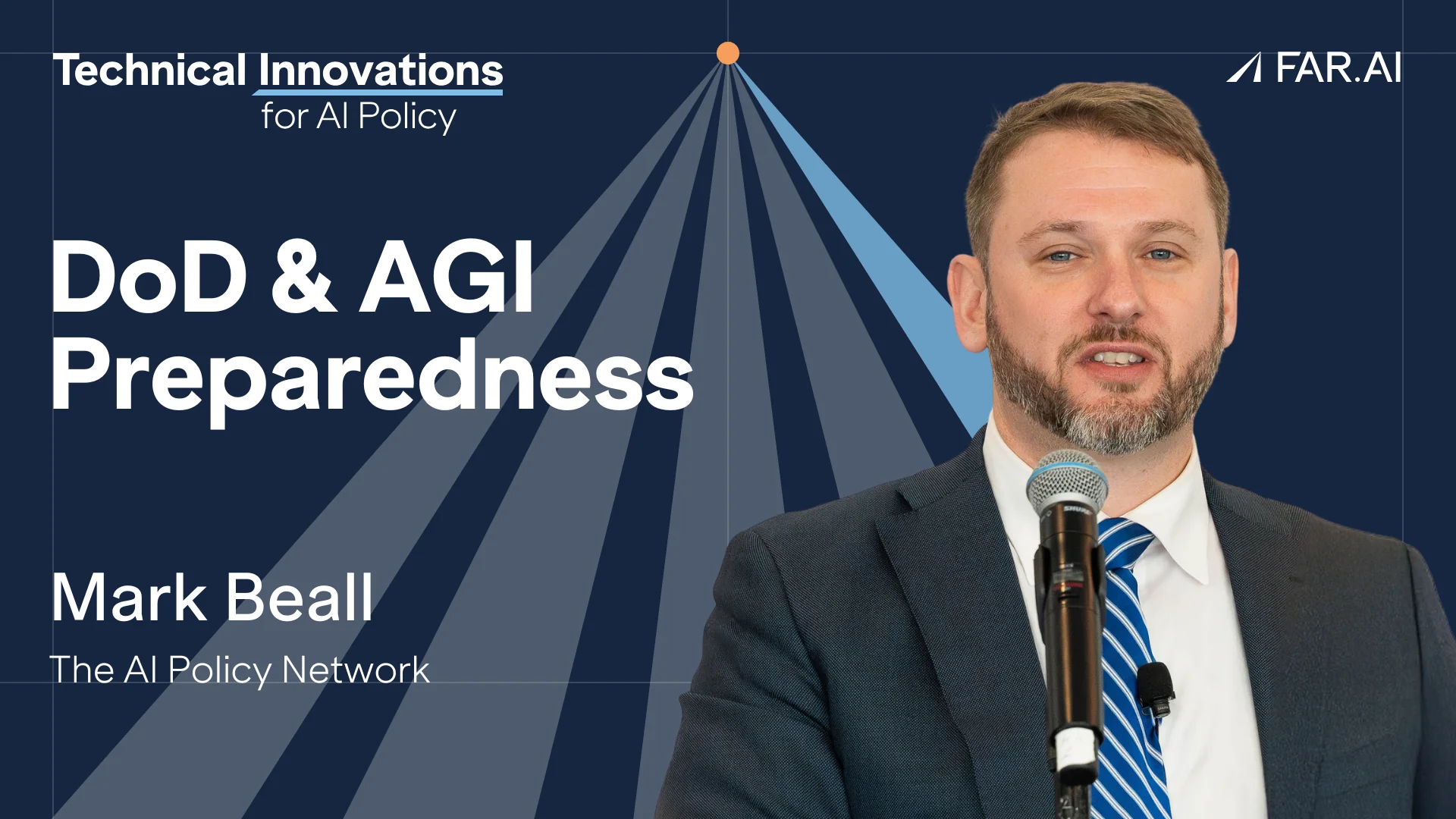
- Mark Beall (AI Policy Network)
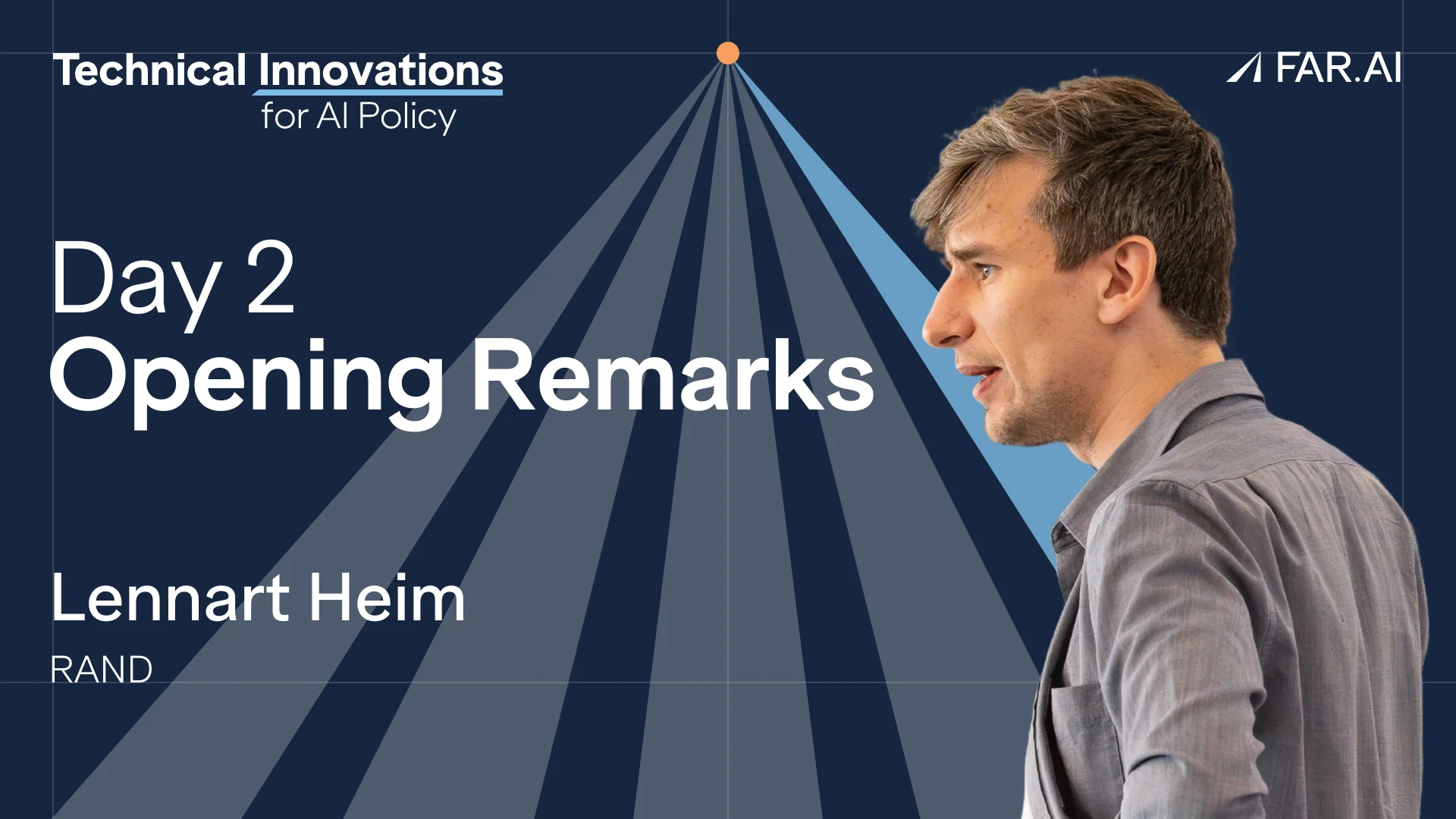
- Lennart Heim (RAND Corporation)
- Helen Toner (Center for Security and Emerging Technology)
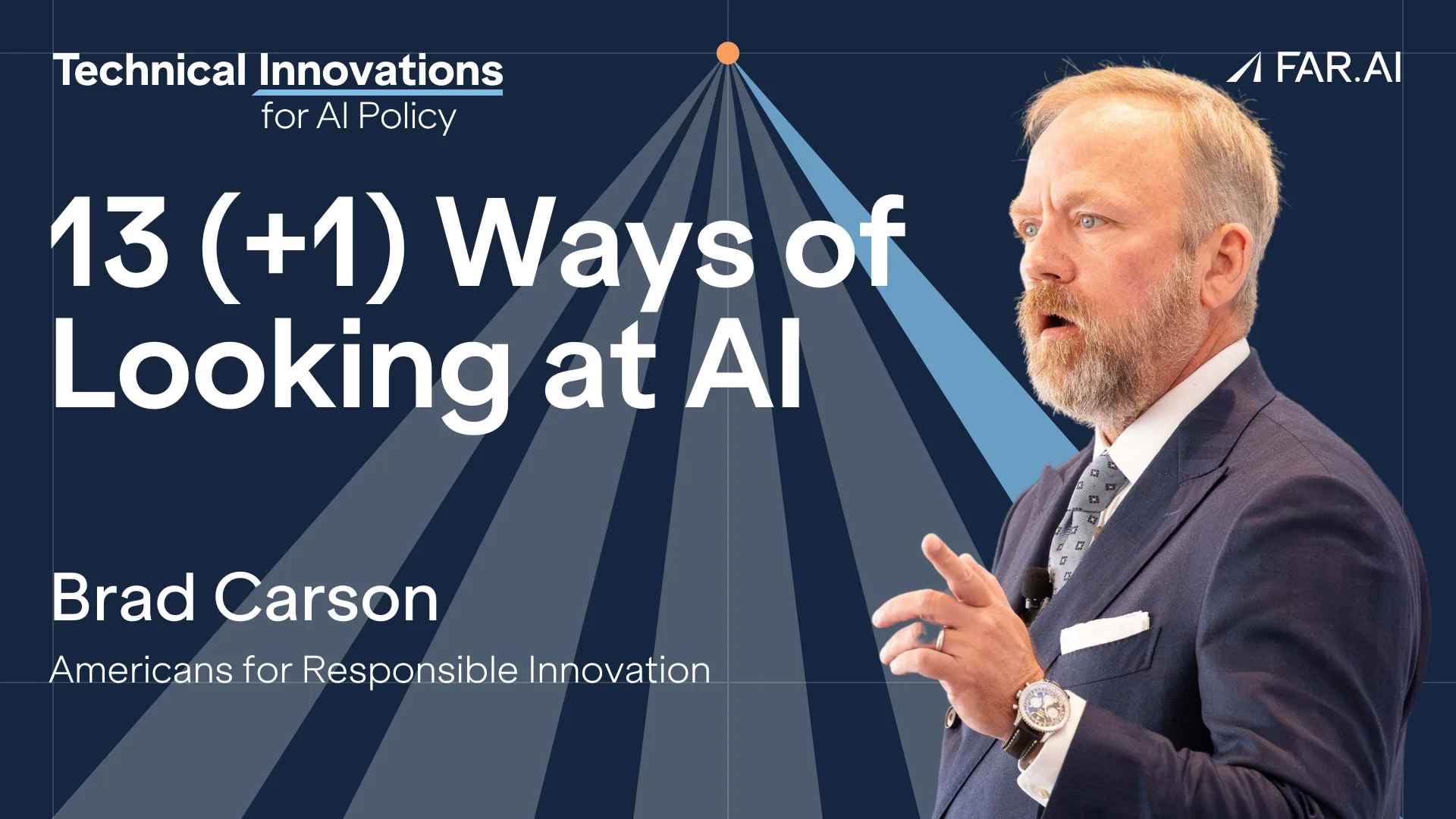
- Brad Carson (Americans for Responsible Innovation)
- Miranda Bogen (Center for Democracy and Technology)
- Tim Fist (Institute for Progress)
- Arnab Datta (Institute for Progress)
- Alex Bores (New York State Assembly)
- Jenny Marron (Institute for AI Policy and Strategy)
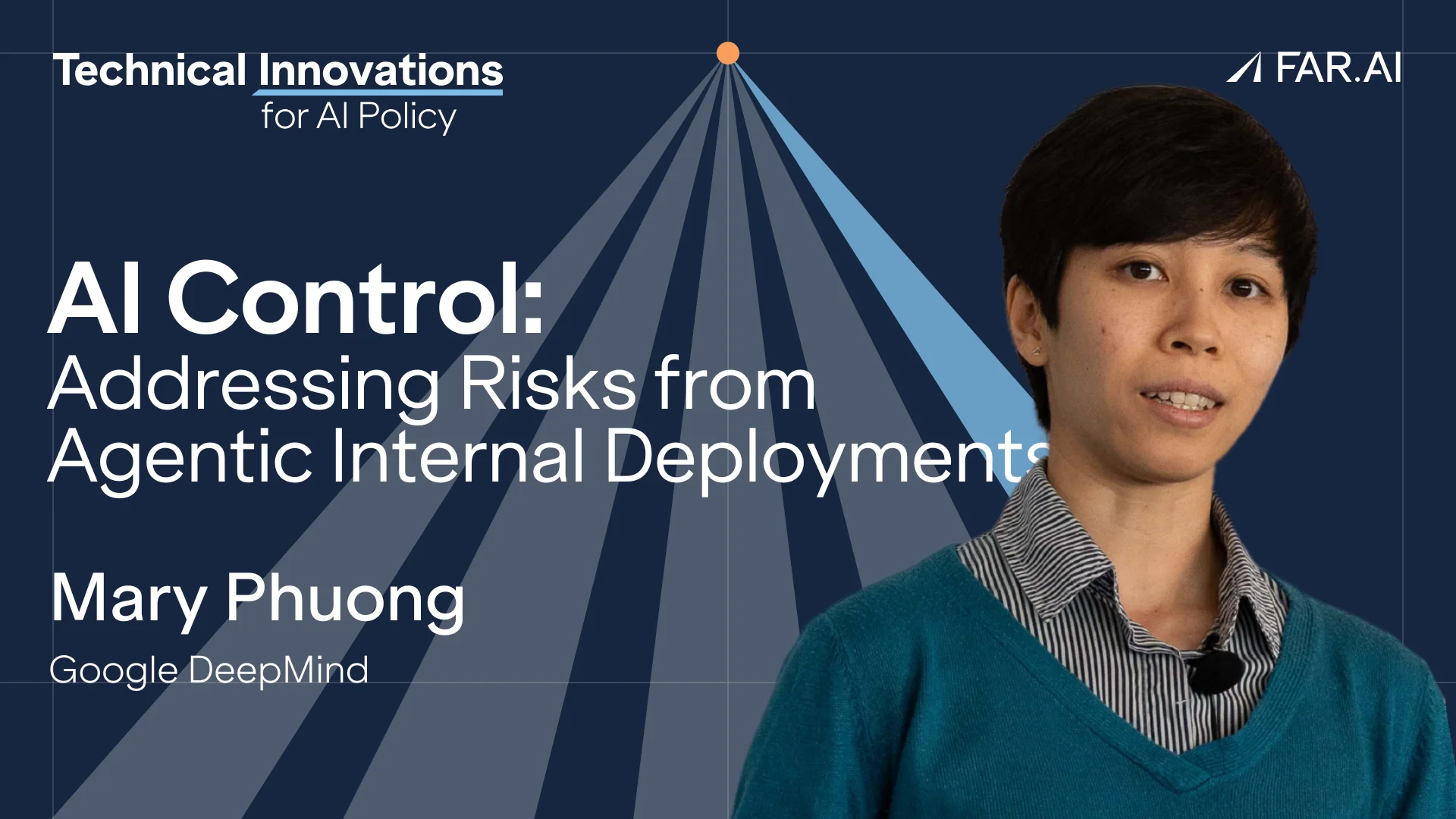
- Mary Phuong (Google DeepMind)
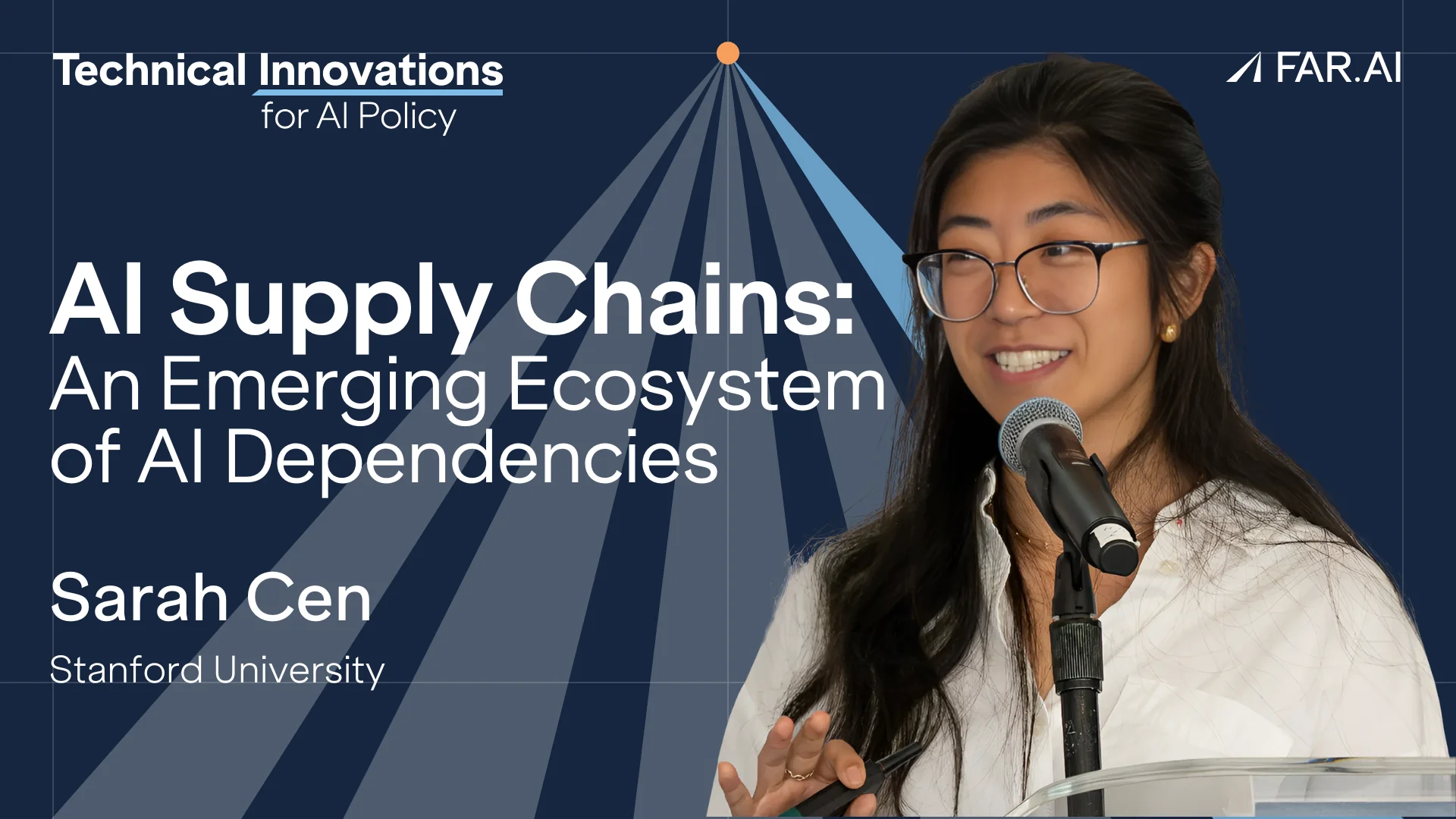
- Sarah Cen (Stanford University)
- Ben Bucknall (University of Oxford)
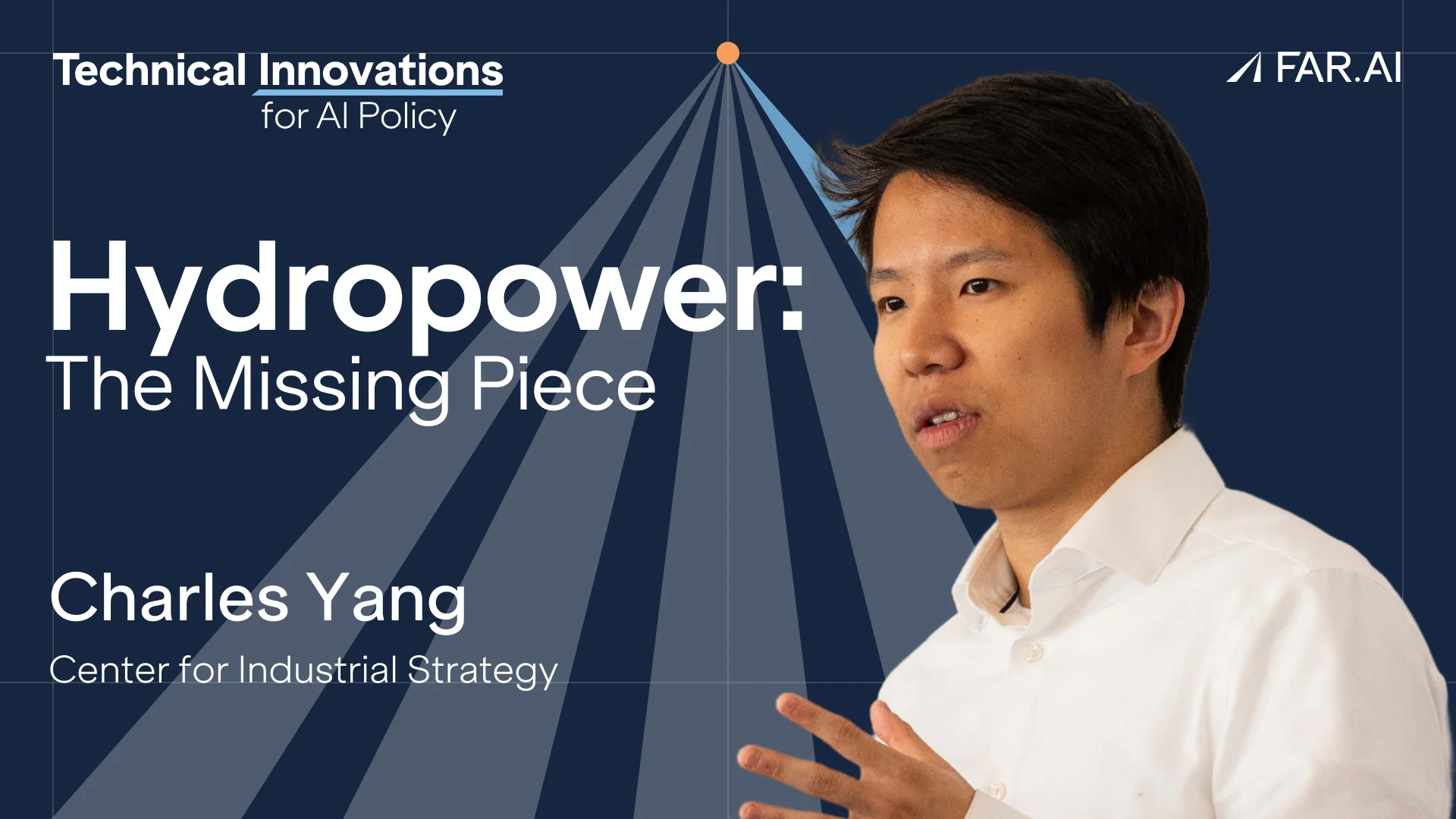
- Charles Yang (Center for Industrial Strategy)
- Lisa Thiergart (Institute for Security and Technology)
- Irene Solaiman (Hugging Face)
- Chris Byrd (RAND Corporation)
- Abigail Hoskin (Horizon Institute for Public Service)
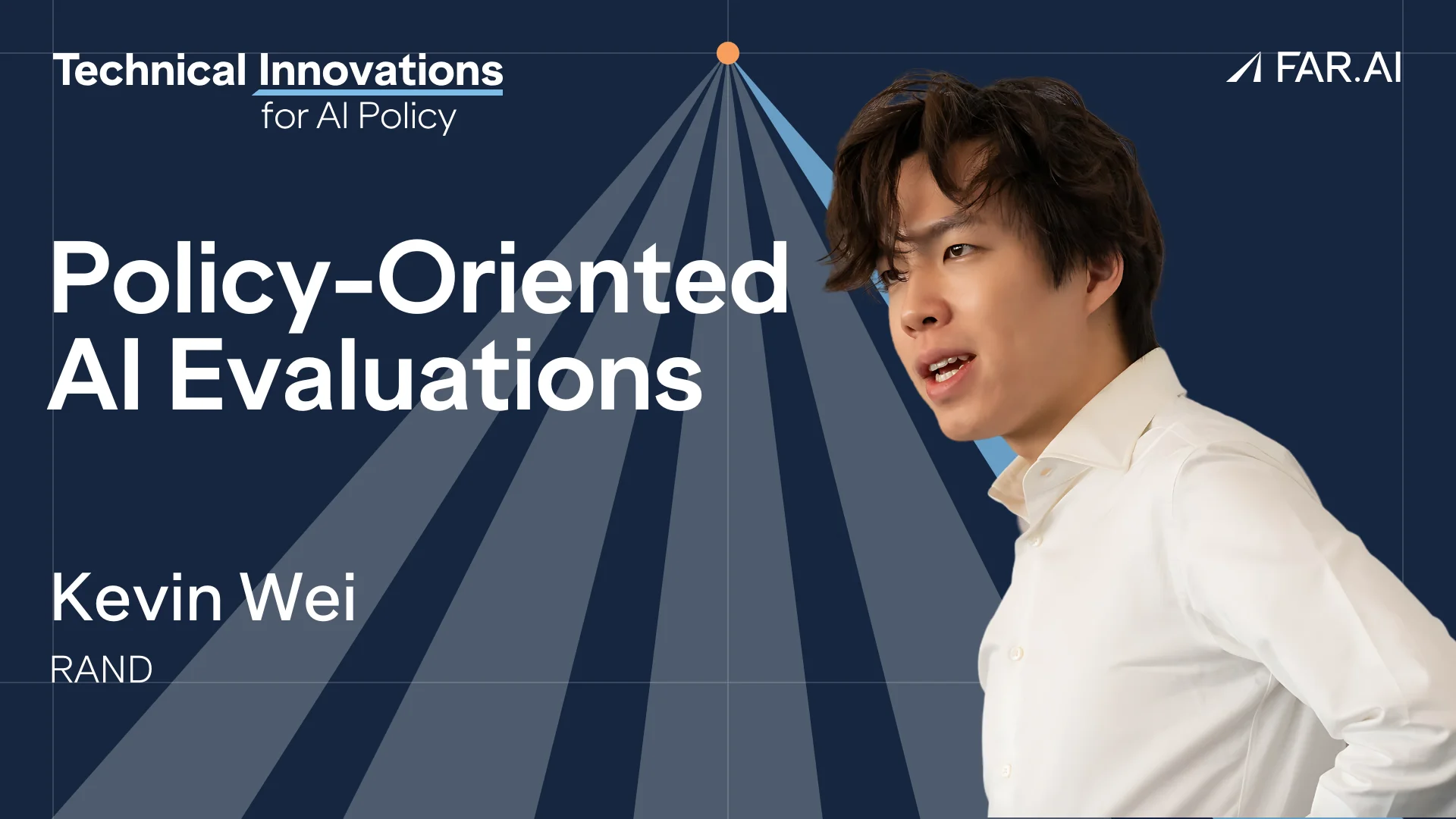
- Kevin Wei (RAND Corporation)
- Adam Gleave (FAR.AI)








Media & Attribution
At this event, we used Chatham House Rule for participants and a default off-the-record policy for press, to encourage honest, candid exchange — while selectively greenlighting certain talks for broader distribution to advance the conversation responsibly. Our policies are as follows:
Confidentiality (Participants) & Off-The-Record (Press) Defaults: The event follows Chatham House Rule: participants may use the information received, but neither the identity nor the affiliation of the individuals providing the information or other participants may be revealed. For press, this event is off-the-record, which includes all interactions at the venue as well as all communication taking place on event platforms.
Exceptions:
- Plenary Room: Speakers in this room may choose to make their remarks on the record, with recordings intended for public release. Whether a session is on- or off-the-record will be clearly indicated to attendees in the room.
- Press Room: Conversations here are on-the-record by default, unless a participant explicitly requests otherwise.
- For participants, Chatham House Rule may be waived if all participants in a conversation explicitly consent to being quoted or identified.
- For press, the off-the-record default may not be waived outside of the above two exceptions; participants may move to the press room to make on-the-record comments.
Additional Guidelines:
- Attendee Privacy: The identity of speakers is public by default; the identity of attendees is private by default. The attendee list may not be shared. Journalists may not report attendee identities (other than speakers) without explicit permission.
- Recording and Photos: Attendees and press may not record or take photos during the event unless the session is on-the-record or all participants have explicitly consented. Photos of attendees may not be published without their consent. Photos of speakers, when taken during their on-the-record remarks, may be shared publicly by default.
- Press Identification: Press members must wear their press identification badges visibly throughout the event. Press members must maintain clear press identification on all event platforms; organizers will configure press profiles with identifiers that must not be altered.
- Press Movement: Press may circulate freely throughout the venue and communicate on event platforms, subject to the above policies.
- Press Designation and Privileges: Only individuals officially registered as press or event organizers may conduct interviews for publication and write articles about the event for news publications or professional media organizations.
- Conduct: All participants are expected to engage respectfully and uphold a professional standard of conduct throughout the event.
- Violation of the above policies may result in removal from the event, restrictions on future participation, or other actions deemed necessary by the organizers.